Hypericum mother tincture for mild to moderate depression
Ceres Redaktion · 10 April 2026
What an initial clinical observational study on Ceres Hypericum mother tincture reveals — and what it does not. Prospective study with 52 patients in Switzerland.
Study source: Kalbermatten N, Saller R. Complementary Medicine Research, 2025
Study design: Prospective, multicentre observational study
Published: September 2025 · DOI: 10.1159/000547920
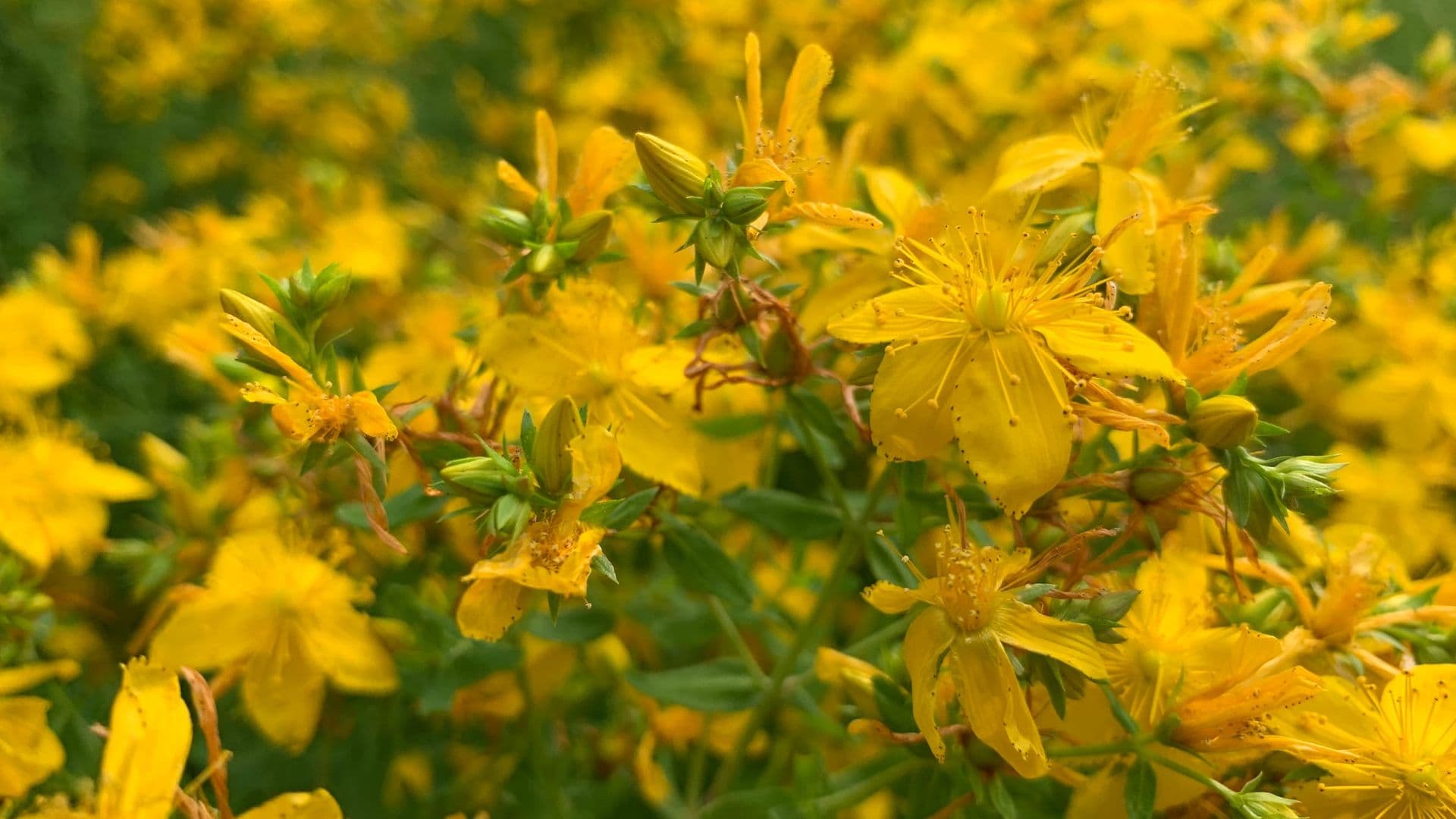
St John’s Wort (Hypericum perforatum) is one of the best researched medicinal plants in Western medicine. For high-dose dry extracts, there is a broad evidence base: several randomised controlled trials and systematic reviews, including a Cochrane Review, conclude that they are comparably effective to synthetic antidepressants in mild to moderate depression — while offering a more favourable side effect profile.
Lower-dose preparations such as mother tinctures — that is, ethanolic fresh plant extracts produced in accordance with the regulations of the Homoeopathic Pharmacopoeia (HAB) — have been less studied until now. Until 2025, there was no formal clinical study for the Ceres Hypericum mother tincture. This has now changed.
The study
The observational study was conducted by Natalie Kalbermatten (Kantonsspital Münsterlingen) and Reinhard Saller (University of Zurich). Fifty-two outpatients with a medically diagnosed mild to moderate depressive episode, treated by their attending general practitioner practices in the German-speaking part of Switzerland with the Ceres Hypericum mother tincture, were included.
The Hamilton Depression Scale 17 (HAM-D 17) served as the measurement instrument — the same scale used in major randomised studies with high-dose dry extracts. Measurements were taken at the start and after six weeks of treatment. The average daily dose was 11–12 drops — considerably below the doses used in studies with dry extracts.
The mother tincture contains significantly less hypericin and hyperforin than high-dose dry extracts — nevertheless, comparable courses were observed.
What the study shows
The HAM-D-17 score decreased by 49% in patients treated with the Ceres Hypericum mother tincture over the observation period (strict analysis, 42 participants) and by 52% in the extended analysis (51 participants). In comparator studies with high-dose dry extracts, this reduction ranged between 45% and 59%.
Responders — defined as those with at least a 50% reduction in the HAM-D-17 score — accounted for 50% and 57% of participants in this observational study. Comparator studies reported response rates between 42% and 70%.
Adverse events were documented in 4% of participants — whereas in comparator studies with dry extracts this proportion ranged between 20% and 39%. One patient reported increased hot flushes; the treating physician assessed a likely connection with the mother tincture. One patient requested to switch to a synthetic antidepressant after three weeks — this decision was not attributed to the mother tincture.
Context: What the study does not show
The authors explicitly emphasize the limitations of this work. As an observational study without a control group, it does not permit causal conclusions. Placebo effects, accompanying medical support, and the natural tendency of depressive episodes to remit could influence the outcomes.
The sample size of 52 participants is also small, and baseline HAM-D scale values were at the lower end of the severity range defined for the study. The authors see their results explicitly as pilot data — a basis for further clinical studies rather than definitive evidence.
This study provides information on the real-world use and tolerability of the Ceres Hypericum mother tincture. It does not replace medical assessment and does not establish indications.
What makes the production special
The study describes the production method of the Ceres Hypericum mother tincture in detail: exclusively plants from organic or biodynamic cultivation or wild collection, hand-harvested at a defined harvest time (two-thirds in bud, one-third in flower), rhythmic grinding in a specially developed mill, and an average storage period of two years in a temperature-controlled dark room.
The authors discuss several hypotheses as to why a mother tincture, despite significantly lower amounts of known individual substances — hypericin, hyperforin, flavonoids — could show comparable outcomes: including the potential role of still structurally unassigned constituents, impacts of harvest timing and production process on the plant spectrum, as well as qualitative aspects such as the tincture’s aroma and taste, which certain participating physicians believe influence the therapeutic experience.
Conflict of interest and transparency
The lead author Natalie Kalbermatten is a member of the founding family of Ceres Heilmittel AG and currently a shareholder — at the time the study was conducted, she was not. Ceres Heilmittel AG financially supported the study by compensating the participating physicians for documenting patient data. These details are fully disclosed in the publication.
The study was published in the journal Complementary Medicine Research (Karger Verlag) and underwent a standard peer-review process.
Original article
Kalbermatten N, Saller R. St John’s Wort (Hypericum perforatum) Fresh Plant Tincture for Patients with Mild to Moderate Depression: A Prospective Observational Study. Complement Med Res. 2025;32(5):363–375. DOI: 10.1159/000547920
Open Access: pmc.ncbi.nlm.nih.gov/articles/PMC12622987
Continue on Ceres channels
These links open the respective platforms directly. They are intended as a supplement to the article, not as a native in-page interaction.